
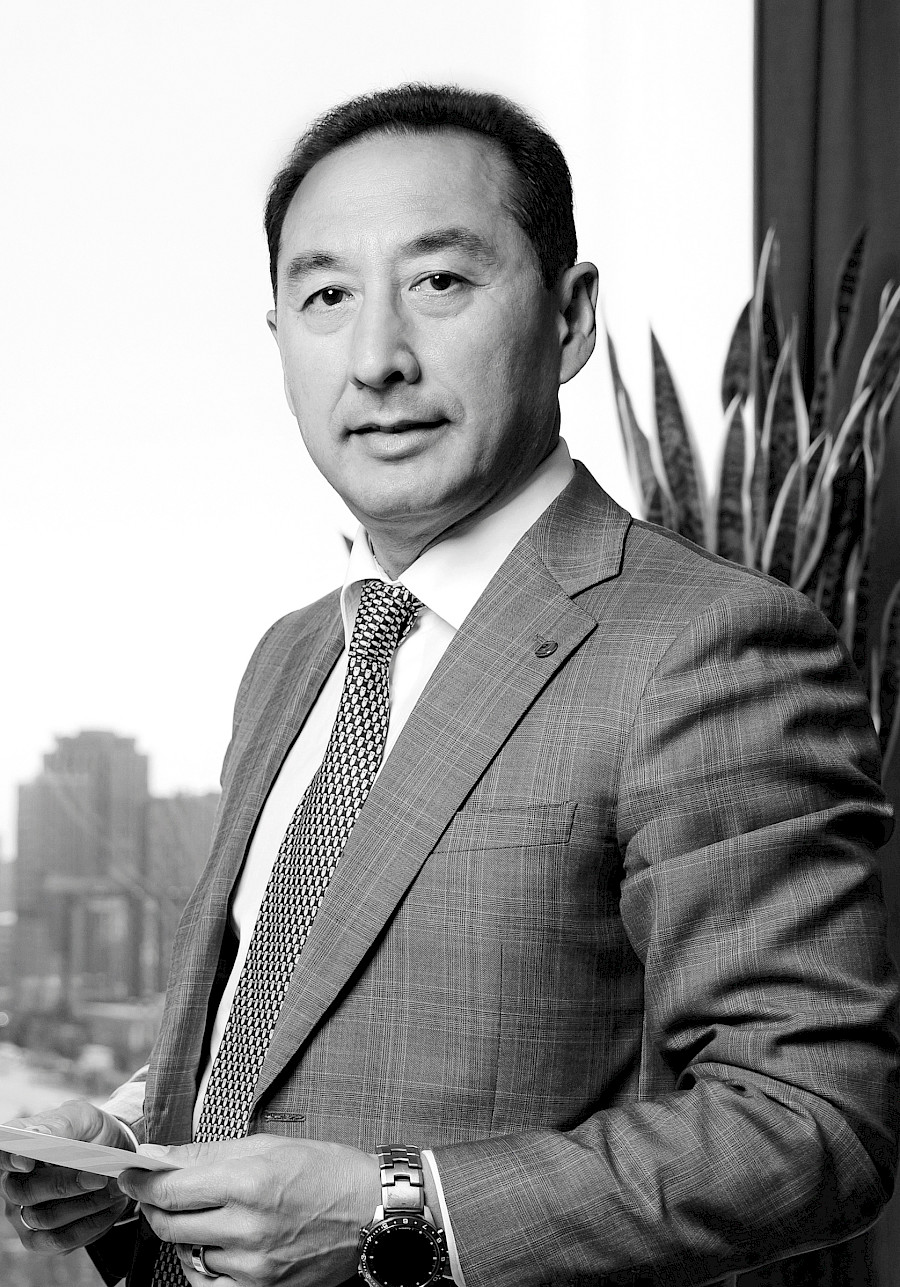
As one of the leading international developers, BI Group continues to expand its global footprint while rethinking the future of urban living. Having recently entered the Azerbaijani market, the company is introducing new residential concepts and infrastructure projects to the region. In this interview, CEO Amangeldy Omarov shares his vision for development in Azerbaijan and the ideas shaping the company’s approach to modern cities.
BI Group has been included in the ENR Top 250 Global Contractors international ranking for several consecutive years. What does this recognition mean to you, and how does it influence the company’s perception abroad?
Inclusion in the ENR Top 250 Global Contractors ranking is, first and foremost, a benchmarking tool and a reference point for aligning with global market leaders. The ranking allows us to objectively assess our position against the world’s leading players, identify areas for growth, and systematically improve our standards. Over the past year, the company has advanced from 173rd to 161st place, and for us, this is not so much a recognition as it is motivation to continue progressing, guided by the standards of industry leaders.
At the same time, ENR is only one indicator of our market position. Based on 2025 results, BI Group ranked among the world’s largest developers by the volume of commissioned housing. According to data from Cushman & Wakefield Veritas, cited by Bloomberg, the company delivered 2.4 million square meters of residential space. This figure exceeds the performance of several major players in the Middle East.
Today, BI Group is implementing projects in Uzbekistan, Azerbaijan, the UAE, and the United States. Financial stability is reinforced by international corporate governance practices: the company undergoes annual audits by KPMG (Big4), and the international rating agency Fitch Ratings has assigned BI Group a BB credit rating with a stable outlook.
Taken together, these factors build trust among international banks and institutional investors, expand access to financing, and enable the company to compete for large-scale projects beyond Kazakhstan.
What factors influenced BI Group’s decision to enter the Azerbaijani market, and was there competition to enter this market?
We see Azerbaijan, and particularly Baku, as a strategic center of the South Caucasus, with a stable economy, favorable macroeconomic indicators, and growing demand for high-quality modern real estate.
The official start of our operations was marked by the launch of the multifunctional complex 4YOU Baku, the construction of which began in the center of the capital. We commenced our activities in partnership with one of the leading players in the country’s construction market — AS Group. The combination of BI Group’s 30 years of expertise and the strong local partner’s deep understanding of the market allows us to create a product that fully meets the expectations of residents and the specific characteristics of the city. At the same time, BI Group had previously implemented a social project in the city of Fuzuli, a children’s creativity center, presented as a gift from Kazakhstan to the brotherly people of Azerbaijan.
Overall, when making the decision to enter the market, we evaluated the following factors: the country’s sustainable economic growth, business activity, a high level of urbanization, demand for modern housing formats, and the market’s need for new standards of quality and living environment.
Undoubtedly, the Azerbaijani market is competitive, attracting interest from both local and international developers. This factor only strengthens our interest in the market.
BI Group positions itself as an industry leader that influences not only the architectural landscape of cities but also the broader public agenda. What new jobs, educational opportunities, and infrastructure projects do you plan to bring to Azerbaijan?
BI Group has extensive experience in delivering technologically complex infrastructure solutions. In Kazakhstan, we participated in the construction of one of the largest projects in the oil and gas sector: BMEI in the Atyrau region. Our portfolio also includes industrial projects for Tengizchevroil (3GI), as well as renewable energy facilities — the Badamsha Wind Farm for the major Italian energy company ENI and GE Renewable Energy.
At the same time, we develop social infrastructure such as modern schools, hospitals, and public spaces, which create jobs and open up new opportunities for regional development.
As mentioned earlier, in Azerbaijan we are taking our first steps: we have built a Creativity Development Center in Fuzuli and are currently constructing a modern hospital in the same district. These initiatives are seen as the next stage of our presence, and in the future, we plan to participate in other infrastructure projects as well.
Overall, we aim to introduce new standards and approaches to the market, thereby contributing to the development not only of our company but of the entire construction industry.
BI Group is actively developing the bigville concept. What is the philosophy behind this approach, and how does it differ from other offerings on the market? Does BI Group plan to develop bigville projects in Azerbaijan as well?
Bigville is a unique residential development concept by BI Group, aimed at creating a new model of urban living and a full and fulfilling lifestyle for residents.
The philosophy of bigville is built around people and their everyday life scenarios, as well as the principle that “everything you need is within walking distance.” From the outset, the infrastructure is carefully planned: safe, car-free courtyards; pedestrian alleys; educational and commercial facilities; public spaces; and areas for sports, leisure, and social interaction, in other words, a holistic ecosystem is created. As a result, residents save valuable time, spending it not in traffic, but to their own benefit.
This approach also contributes to the development of polycentric cities. It is a model in which a city evolves not around a single center, but through a network of fully developed districts, each with its own infrastructure and economic activity. As a result, the burden on the transport system is reduced, and commuter migration decreases.
BI Group has already successfully implemented bigville in Kazakhstan and Uzbekistan, and this format has demonstrated strong demand among residents. We view bigville as one of our signature concepts in international markets as well. Therefore, in developing projects in Azerbaijan, we are also exploring the possibility of implementing this format, as it aligns with the global trend toward creating comfortable and sustainable urban environments.
What impressed or surprised you in Baku? Which architectural or urban planning solutions have you, as a developer, observed and plan to adapt in your projects?
We should give due credit to the authorities of Azerbaijan and the administration of the “White City” (Ağ Şəhər) project for their well-conceived urban planning and architectural solutions, which have given Baku a “new face” in its residential districts. This is a vivid example of well-planned urbanization, transforming what was once a polluted industrial area into one of the most modern and prestigious districts. The project itself is a benchmark for proper urban development and demonstrates how large-scale renovation can be implemented systematically: with a unified architectural concept, well-thought-out infrastructure, and high-quality public spaces. In this regard, capitals and cities across the CIS have much to learn from Baku. There are no “harsh” reds, blues, or other overly saturated tones, instead, natural colors prevail, creating a harmonious and contemporary aesthetic. This concept has every chance of remaining relevant for decades. “White City” represents a master development model worthy of application in any CIS city, including in terms of transparency in business practices.
This approach largely aligns with the model implemented by state-backed development companies in Dubai and is strategically close to us, as reflected in the bigville concept.
Companies often hesitate to sacrifice short-term gains in favor of a sustainable approach. What does ESG mean to you in practice? What specific actions do you take?
For us, ESG is an integral part of our daily operations and responsibility. We understand that our decisions impact people for decades to come; therefore, a sustainable approach is a matter of long-term value. In the past year alone, we allocated approximately $24 million to these efforts.
An important part of our social responsibility is the work of the corporate foundation “BI-Zhuldyzai,” which implements projects through monthly voluntary contributions from employees and shareholders. For many years, the foundation has been supporting children with special needs by financing high-tech surgeries, developing inclusive sports, assisting with rehabilitation, and creating opportunities for a full and fulfilling life.
In addition, the holding implements environmental initiatives, including the “Trails of Happiness” project aimed at developing and improving mountain routes in southern Kazakhstan, as well as the BI Green initiative, under which we green the cities where we operate. In the past year alone, we planted 91,000 green spaces with a total value of approximately $1.2 million.
Within the company, ESG is also about people. We invest in the development of our employees and partners through our corporate university and the BuildEx training center, create safe working conditions, and foster a kaizen culture, the essence of which lies in small, continuous improvements that help achieve major goals both professionally and personally.
The company has experience in creating and developing its own school networks. How did BI Group’s journey into the education sector begin, and how do you see your role there?
BI Group’s entry into the education sector began as a continuation of our mission to create a fully-fledged living environment. We observed a shortage of school places in the largest cities of Kazakhstan amid demographic growth and decided to support both the state and society.
One of the first projects in education was the BINOM network of innovative schools, the first large-scale public-private partnership project in school education. We succeeded in building an academic model aligned with the best global standards, with systematic quality management and measurable results. According to the PISA for Schools study, BINOM schools scored 51–76 points higher than the national average in Kazakhstan and even exceeded the performance of one of the global leaders, namely Estonia. At the same time, it is fundamentally important that BINOM provides free education accessible to a wide range of Kazakh families.
At the same time, we are developing a network of international-level schools: RIVIERA International School, Quantum STEM School, Quantum Tech School, and Farabi International School. These schools operate under IB, AP, and Cambridge programs, attract strong local and international educators, and create an educational environment aligned with global standards.
Thus, our role in education is not only that of an investor or developer, but also that of a creator of the educational environment and management expertise.
BI Group is one of the few developers from the CIS that has entered the international market. How does your approach differ between local and global markets?
Our principle is as follows: wherever the company operates, it is always a unified One BI team, united by a common strategy, mission, values, and standards. From the very beginning, we built BI Group as a systemic developer; therefore, our approaches to quality, safety, design, and project management are standardized and applied across all markets of presence.
At the same time, our priority is the quality of residential complexes and services. For many years, we have been working under a continuous improvement system based on the kaizen principle, which involves ongoing efforts to increase process efficiency and reduce losses. An important role in this is played by our internal personnel training system. We established the BuildEx training center to train construction workers, including employees of our partners, in BI Group standards. At the same time, the company’s top managers and shareholders, as well as engineering and technical staff and Corporate Center managers, also undergo training and hands-on practice (bricklaying, reinforcement tying, plastering and finishing works, tile laying) and pass professional tests and practical assessments. I am confident that this approach will elevate the quality of our product to the next level. In addition, we observe how significantly respect for construction work increases even among administrative staff who are not directly involved in physical work on construction sites.
We always adapt our product to the specific characteristics of each country. We study the local context, people’s lifestyles, cultural characteristics, and customer expectations.
Which markets have been the most challenging for you and why?
Each new market is unique in its own way, as development is directly connected not only with the economy, but also with culture, legislation, people’s expectations, and even climate. There are many factors, and no universal solutions exist. In each country, it is essential to consider local specifics and adapt approaches to client needs while maintaining quality standards.
For example, in the UAE, competition is very high. The strongest global developers with extensive experience in international markets are present there, and client expectations are initially at a high level. This is a market where it is necessary to meet the best international practices and continuously demonstrate expertise.
In the United States, the primary challenge lies in the complexity of regulatory and permitting procedures. Development requires going through numerous approvals and strict compliance with norms and standards at all stages. The mentality and the strong role of local communities, which are actively involved in urban development processes, also play an important role.
In Uzbekistan, the market is actively developing, has significant potential, and is undergoing transformation. It is important to take into account the specifics of the regulatory framework, which continues to evolve, as well as the formation of new standards for housing and the urban environment, along with high seismic resistance requirements for projects. At the same time, the market is open to new formats, and our experience in integrated territorial development has proven to be in demand.
What are the three key changes you would like to introduce to the real estate market in the future?
Today, the market is largely focused on constructing and selling housing as a product. We believe that development should carry broader responsibility for the quality of life after occupancy. Our mission is to create an environment for the development of human potential and to make the world better with each project. We build happiness, and this means that it is important not only to build a house, but also to provide a comfortable and functional living environment (lifestyle) for many years.
The second priority is the development of a service and digital ecosystem around housing and the industry as a whole. Today, we have already created the BIG App platform, which brings together nearly 420,000 users, residents of our properties. Through the application, they manage services, contact the management company, receive services, and interact with the home ecosystem. All requests are processed promptly and efficiently, with a strong focus on quality and convenience for residents.
The third change is the digitalization and enhancement of efficiency and transparency across the industry as a whole. We are already implementing our own AI solutions, digital systems for monitoring construction processes, BIM modeling, and digital lifecycle management of assets. BI Group partners operate on digital platforms such as Bnect, Dispatch, SBS, Opera Build, Dom.kz, and Alemica. Data is the new oil, and we already have a large data lake for analysis, validation, and the implementation of new hypotheses.
At the core of all this are our values: integrity, customer happiness, the best team, kaizen, and hard work. These values help us build a new development model focused on people and long-term value.